Most pages in this cluster end with a qualification. This one largely does not, and that is what makes it worth reading alongside the others.
For nearly every idiom with a story attached, one of two things is missing: either the practice in the story is undocumented, or the practice is real but nothing links the phrase to it. For "bury the hatchet", both halves are on paper. There is a colonial record of axes actually being buried as part of a peace agreement, and there is a printed use of the phrase in the same context, and they are separated by a plausible interval rather than by centuries. That is close to the best case the tracing method behind these pages can produce.
The citation trail
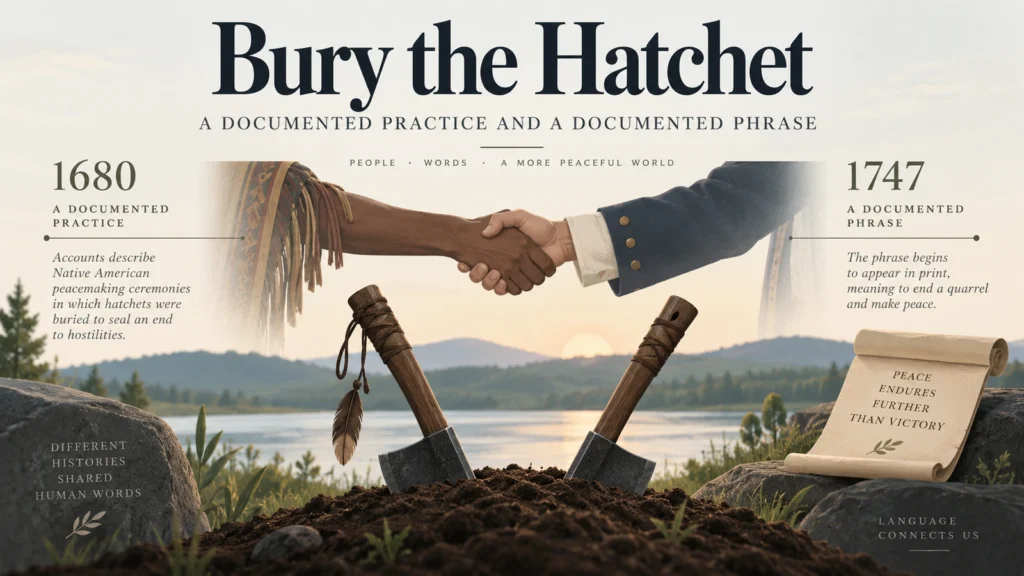
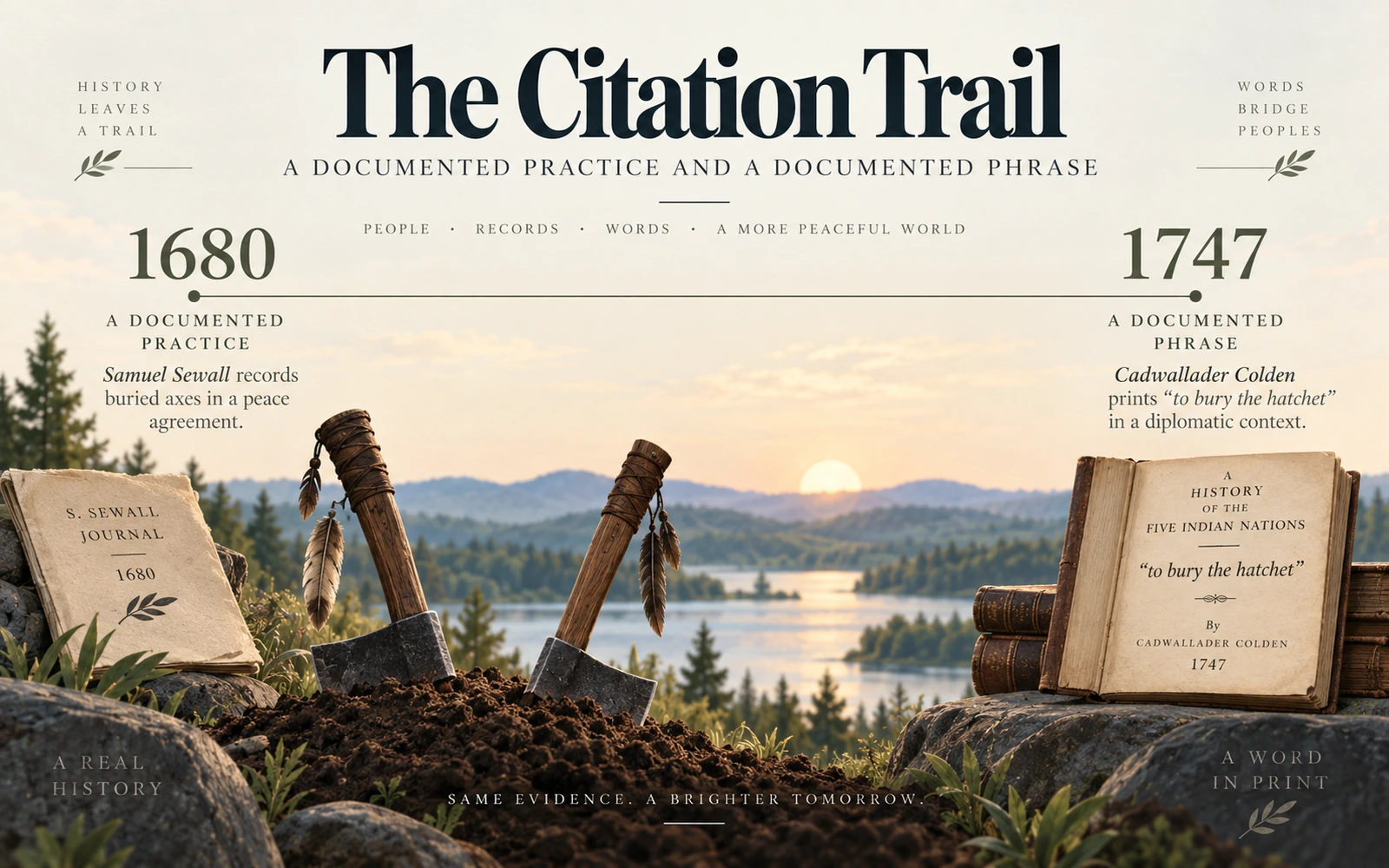
1680, Samuel Sewall. Phrase Finder reports Sewall recording that leaders "buried two Axes in ye Ground" as part of a peace agreement, and describing the ceremony as "more significant and binding than all Articles of Peace." That last clause is the valuable part. It is a contemporary observer saying explicitly that the act carried more weight than the written treaty, which tells you the burial was understood as the binding element and not as decoration around it.
1747, Cadwallader Colden, The History of the Five Indian Nations of Canada. Phrase Finder gives this as the earliest explicit printed appearance of the phrase, in a passage about sending messengers to other nations "to bury the Hatchet, and to make a Covenant-chain."
We report both as Phrase Finder reports them. Neither primary text was opened for this page.
Why the sixty-seven year gap is a feature
A reader who has been through the rest of this cluster will have learned to be suspicious of gaps between a practice and a phrase. The ancient Greek voting story fails on a gap of two thousand years. Sixty-seven is a different order of thing entirely.
More to the point, the two records are not independent guesses reaching for the same explanation. They are the same context, in the same colonial-record genre, describing the same kind of diplomacy. Sewall in 1680 describes the act without the phrase; Colden in 1747 uses the phrase in a passage about the diplomacy. That is what an idiom forming looks like when someone happens to have written down both ends of it.
Compare the shape of the false stories in this cluster. In those, the practice belongs to one world and the phrase turns up in another with no path between them: a bullet-biting battlefield and a slang dictionary, a Greek assembly and a Wisconsin newspaper, a courtroom rule and a satirical cartoon. Here there is no gap between the worlds. It is one world throughout.

What the phrase does and does not tell you
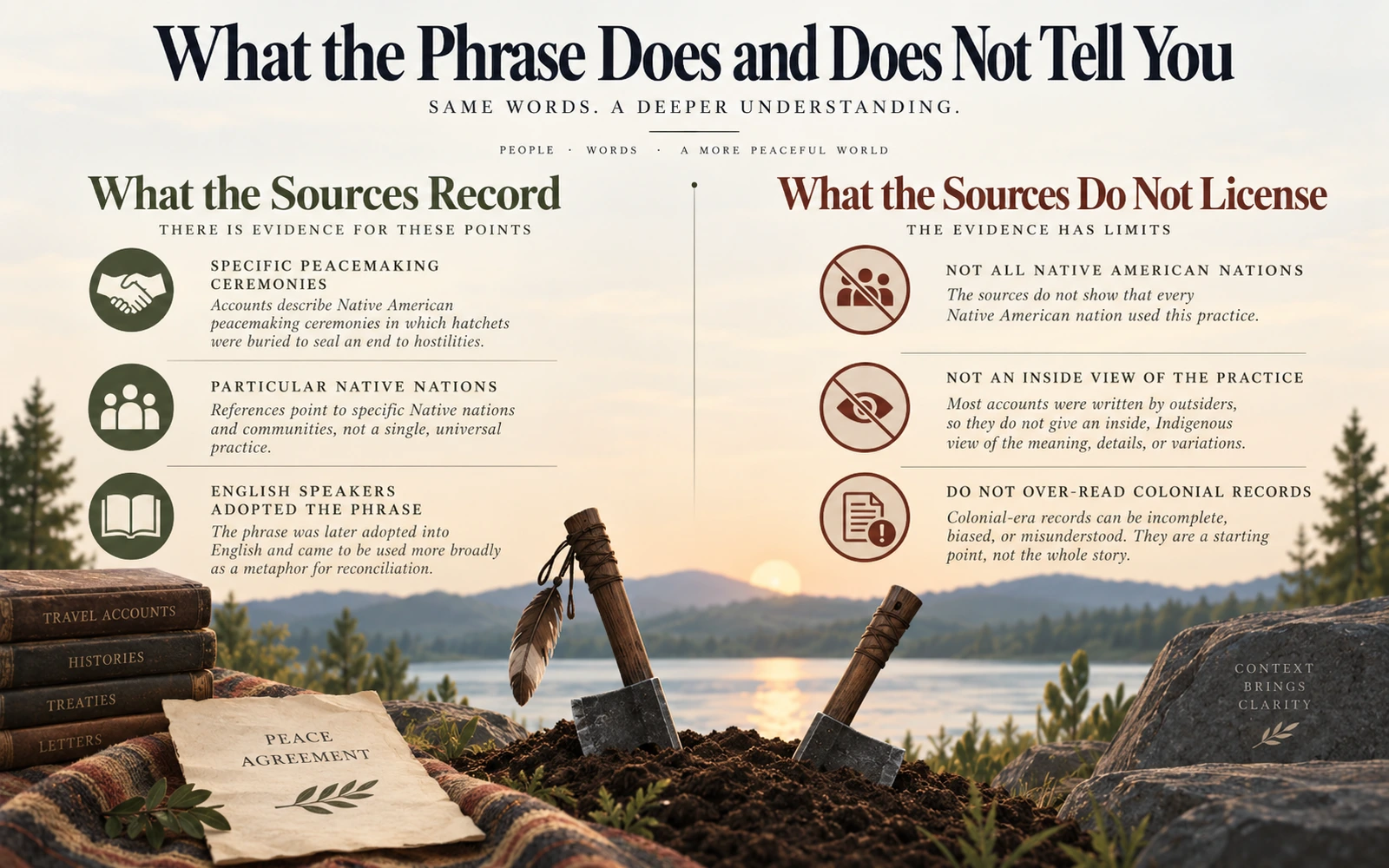
Some care is needed with what this page is claiming, because idioms of this kind carry a lot of accumulated colonial framing.
What the two sources record is that particular Native American nations, in negotiations that involved English colonists closely enough for those colonists to write about them, used the burial of axes as a binding element of a peace agreement, and that English speakers in North America took a phrase from it.
What that does not license is a general claim about Native American practice, which was never one thing, or any of the ceremonial vocabulary that colonial writing routinely draped over these accounts. Two colonial observers writing sixty-seven years apart are two data points, and they are data points about what English speakers saw and recorded, which is not the same as a description of the practice from the inside.
Being precise about that is the same discipline this site applies to the invented courtroom in "rule of thumb", just pointed at a different failure mode. There the risk is inventing a source. Here the risk is over-reading the sources you have.
The phrase in modern use
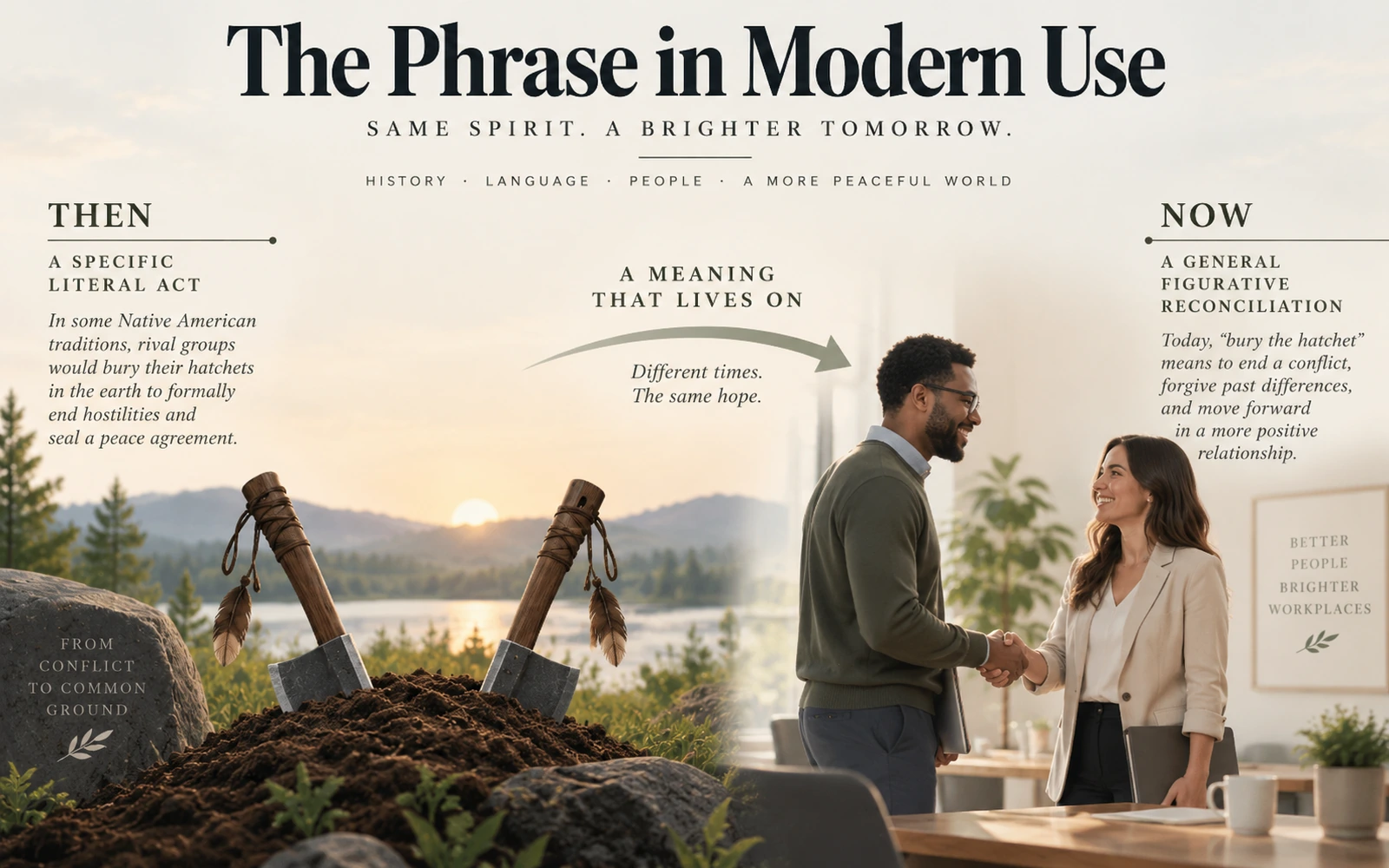
The modern sense has drifted a long way from diplomacy between nations and now covers almost any reconciliation, including trivial ones. Two colleagues who stop sniping at each other have buried the hatchet.
That drift is ordinary, and it is worth noticing that it went in the direction most idioms go: from a specific, weighty, literal act toward a general, light, figurative one. The phrases that resist this are the ones whose literal scene stayed familiar. Nobody buries an axe to end an argument any more, so the words were free to float.
Register and region
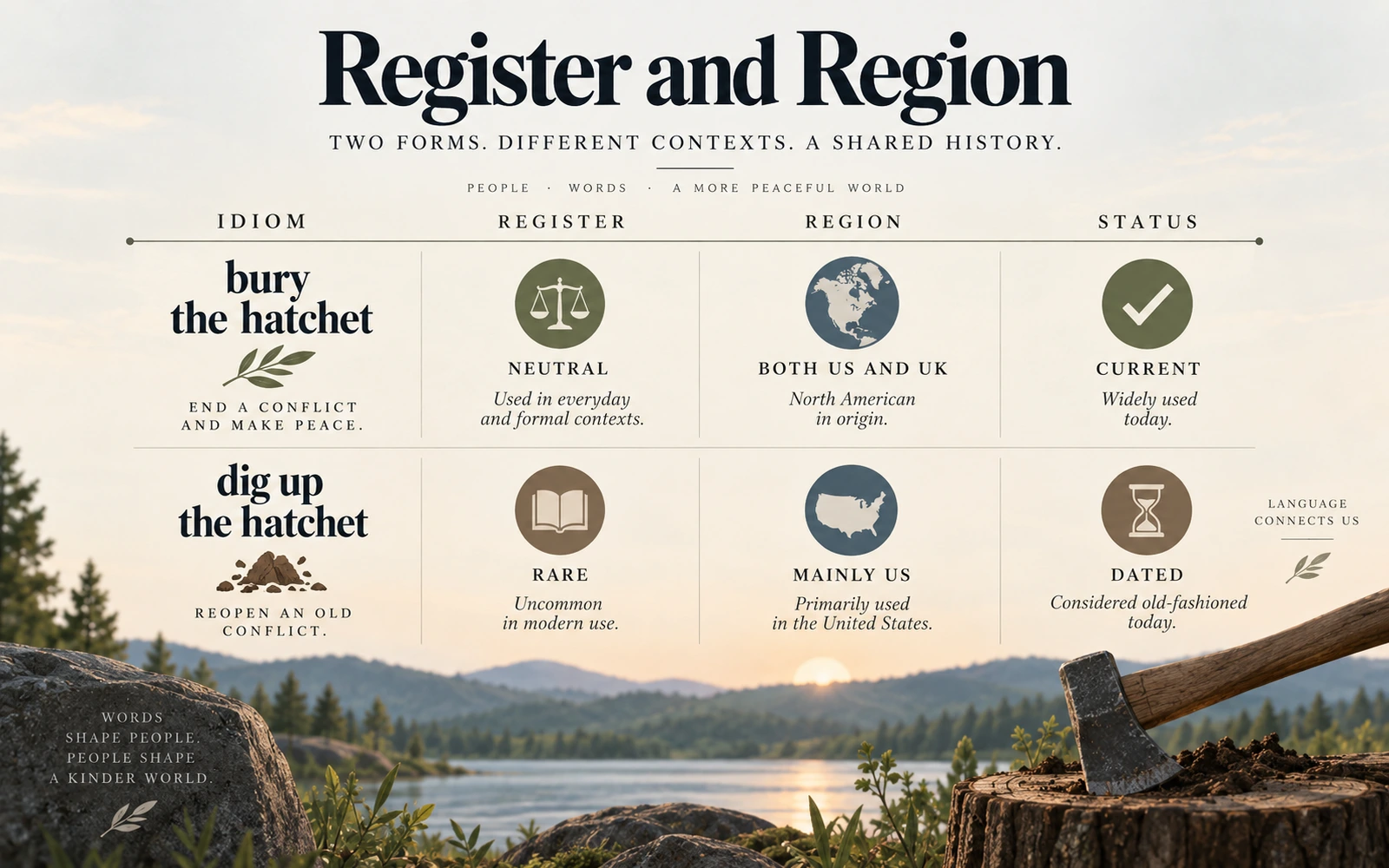
| Register | Region | Status | |
|---|---|---|---|
| bury the hatchet | neutral. Fine in speech, journalism and business writing | both US and UK, North American in origin | current |
| dig up the hatchet | rare, and mostly found in historical writing about the same period | mainly US | dated |
What is genuinely unresolved
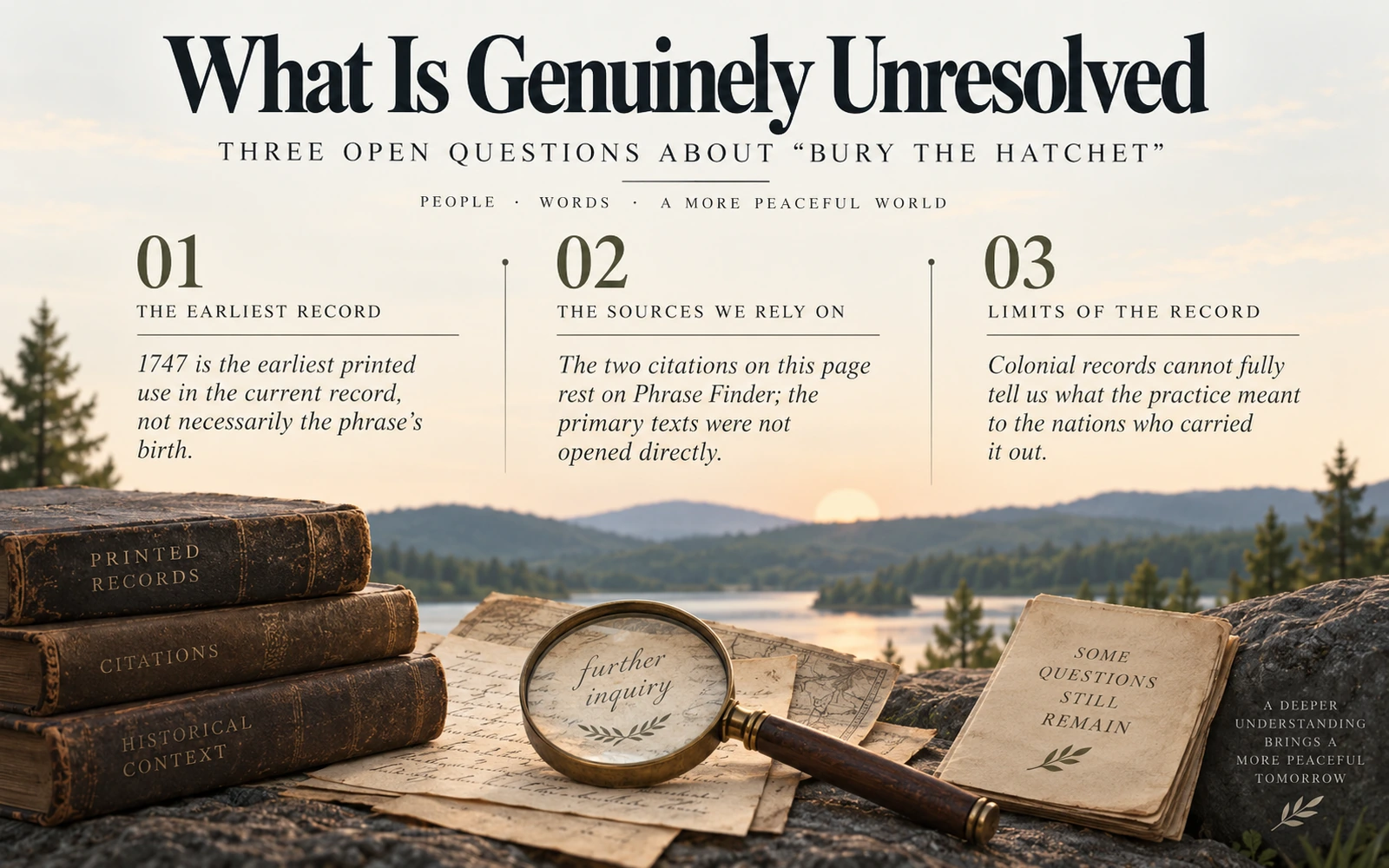
Whether 1747 is the earliest printed use is a claim about the record, not about the phrase. Colden was describing established diplomacy, so the phrase was very likely in speech before he printed it.
Neither primary source was opened. Both citations rest on Phrase Finder.
What the practice meant to the nations who carried it out is not something these sources can tell you. They are colonial records, and this page does not treat them as more than that. A reader who wants that question answered should go to sources from those nations, which is outside what this page attempts.