
This is a rare thing in this cluster: an idiom whose obvious explanation is also the correct one.
A pipe organ has stops, which are knobs the player pulls to let air into additional ranks of pipes. Pull out more of them and more of the instrument sounds. Pull out all of them and you get everything the organ has. That mechanism is the origin, Phrase Finder confirms it, and there is a dated first figurative use to go with it.
Recording that plainly matters. A site that only publishes the cases where the popular story collapses would give a false impression of how often popular stories are wrong, and the method behind these origin pages is supposed to test explanations, not to be against them.
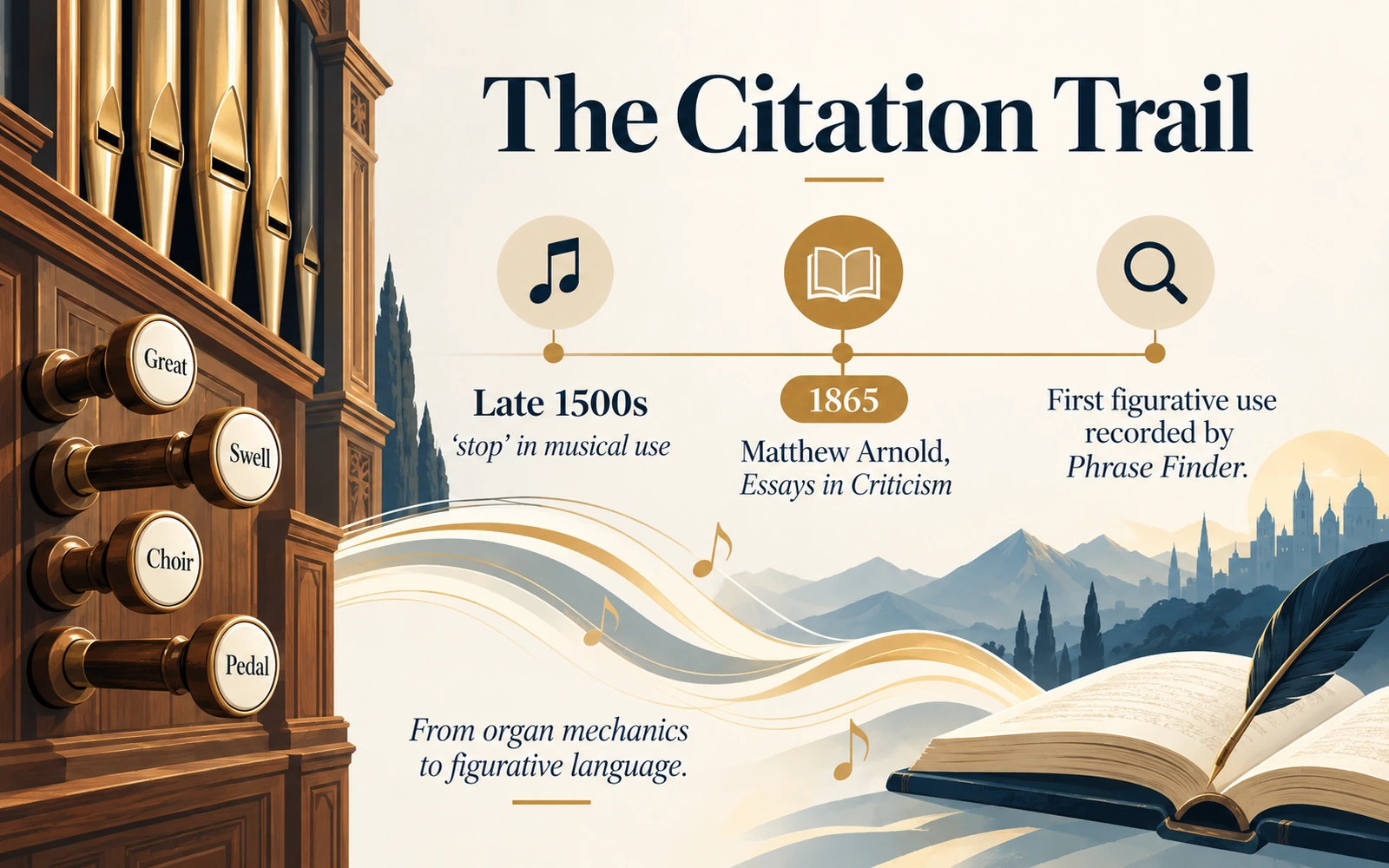
The citation trail
Phrase Finder gives the first figurative use as Matthew Arnold, Essays in Criticism, 1865:
"Knowing how unpopular a task one is undertaking when one tries to pull out a few more stops in that, somewhat narrow-toned organ, the modern Englishman."
We quote it as Phrase Finder gives it and have not opened Essays in Criticism.
Phrase Finder also notes that "stop" in a musical sense is recorded considerably earlier, from the late sixteenth century, though it initially referred to notes or keys rather than to the drawknobs on an organ console. So the word was in musical use for something like three centuries before Arnold reached for it as a figure.
What Arnold's sentence is actually doing
The 1865 line repays a slow read, because it is stranger and better than a bare first-citation note suggests.
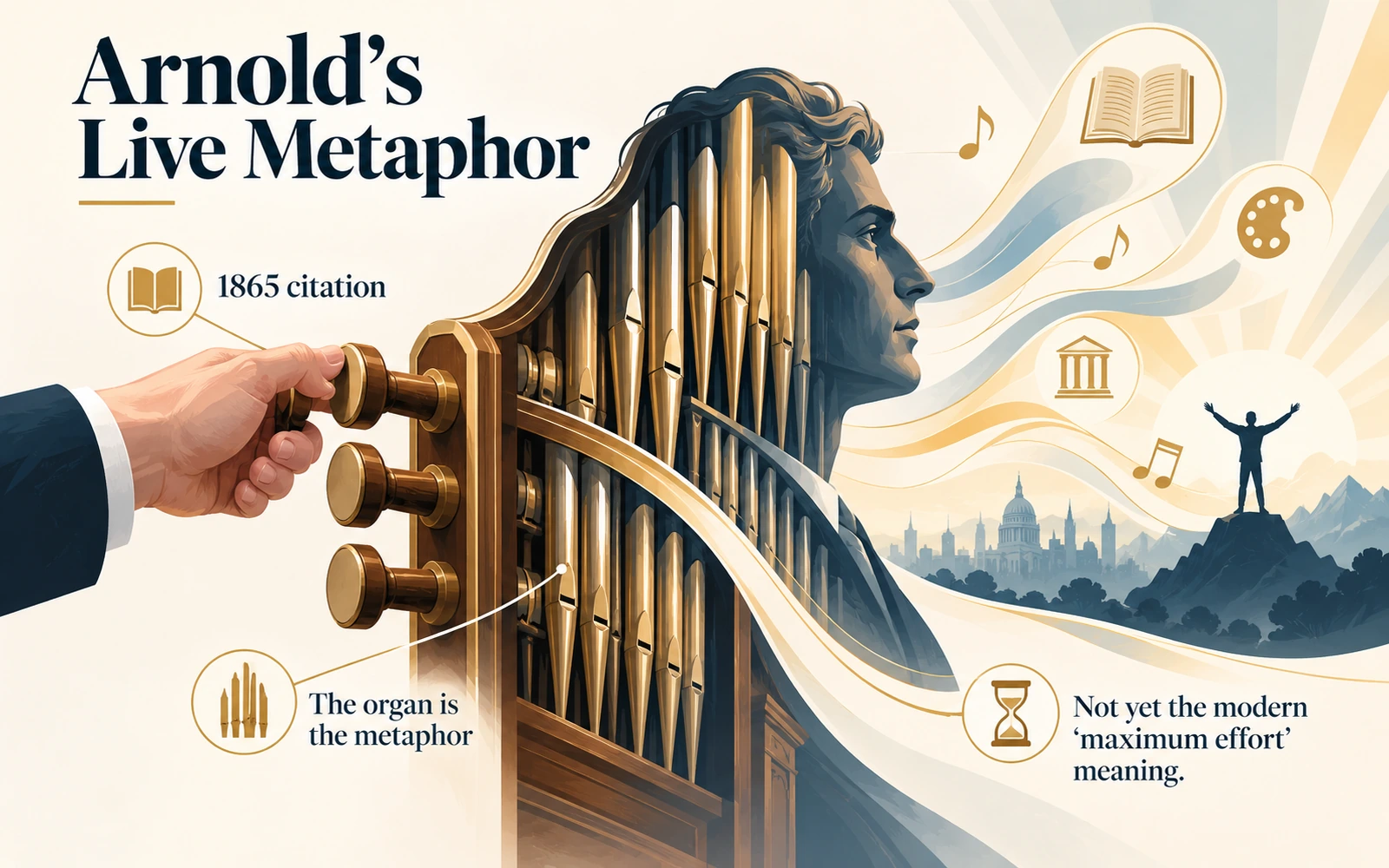
Arnold is not using "pull out all the stops" as a set phrase meaning maximum effort. He is building a live metaphor in which the modern Englishman is himself the organ, and a narrow-toned one, with more stops available than are usually drawn. Pulling out a few more of them means getting a wider range of response out of a limited instrument, and Arnold says doing so is unpopular work.
That is not the modern idiom. The modern idiom means going all out, sparing nothing, and it has no organ in it at all for most people who use it. What the citation catches is the moment before the phrase set: a writer using the image freshly and deliberately, expecting his reader to picture the console.
A first citation of this quality is unusual and it is worth saying why. Most earliest citations are flat uses of a phrase already worn smooth, which is why they tell you so little. This one shows the metaphor still doing work, which is the difference between a date and an explanation.
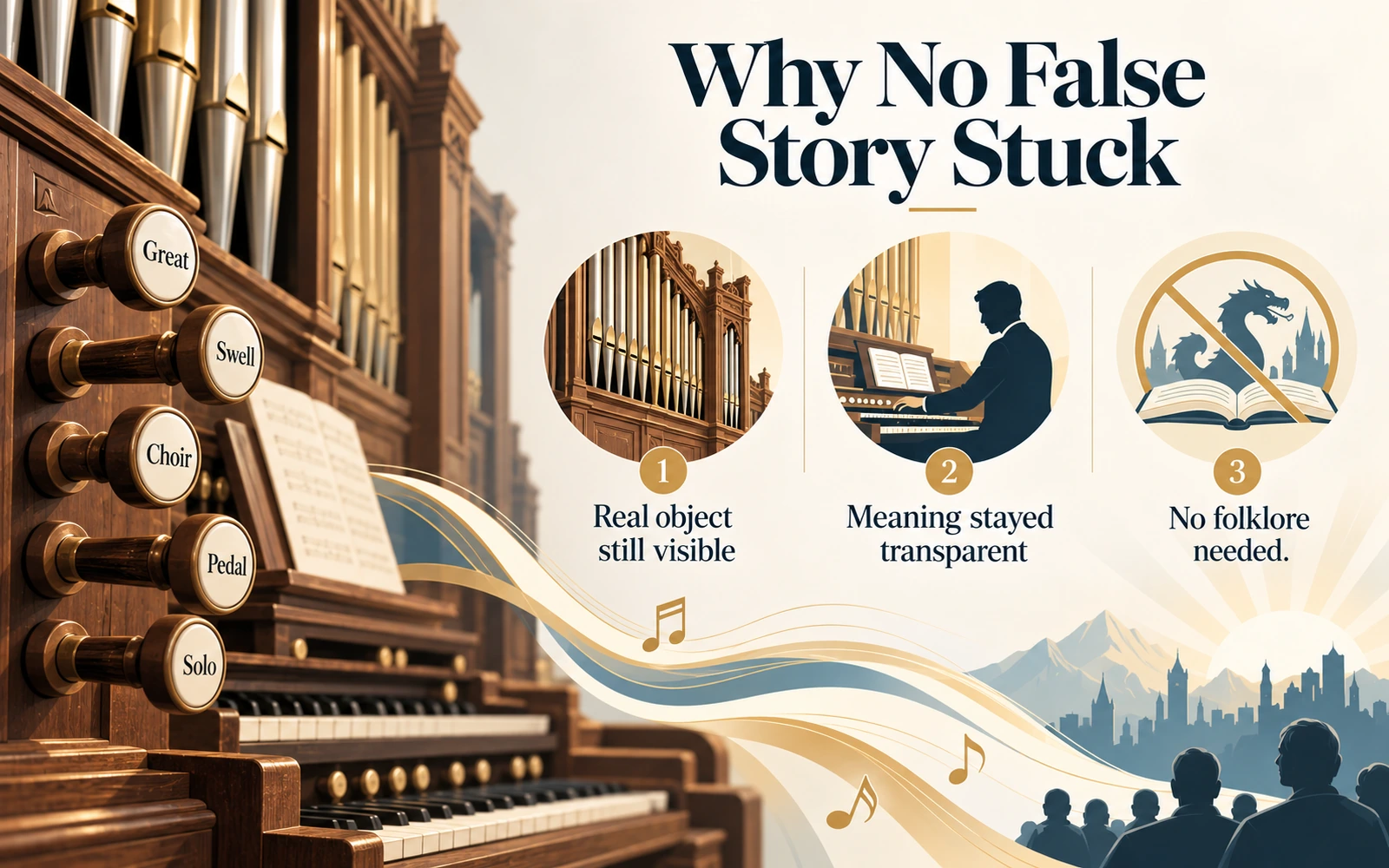
Why no false story attached to this one
Almost every other phrase in this cluster attracted folklore. This one did not, and the reason is the same one that keeps a phrase safe generally: the literal scene stayed available.
Pipe organs still exist, are still played, and still have stops. A reader who wonders where the phrase comes from can go and look at one. Compare the phrases that collect myths: the beam that was called a bucket, the rope beds behind "sleep tight", the archaic senses of words like "beck" and "sleight" that generate half the errors in the misused-phrases cluster on this site. In every case the object or the word sense went out of everyday life, the phrase stopped explaining itself, and something moved in to fill the space.
The organ never left. So nothing moved in.
A note on the singular and plural
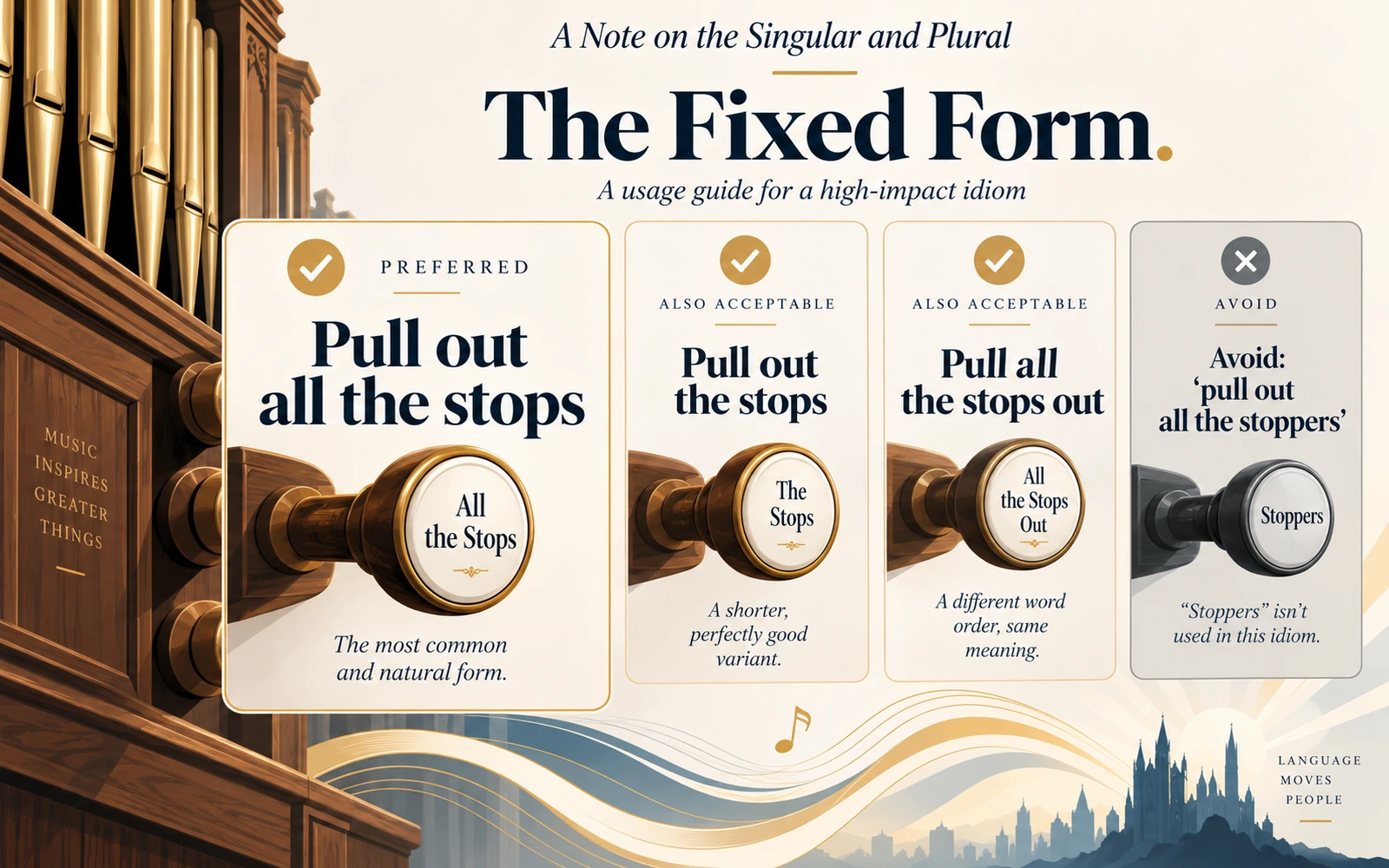
"Pull out all the stops" is the fixed form. You will also see "pull out the stops" and, occasionally, "pull all the stops out", which is the same idiom with the particle moved and is unremarkable in British usage.
What you should not do is write "pull out all the stoppers", which turns up occasionally and belongs to a different object entirely. It is the ordinary kind of substitution error: a word that has become slightly opaque gets replaced by a more familiar one that sounds close.
Register and region
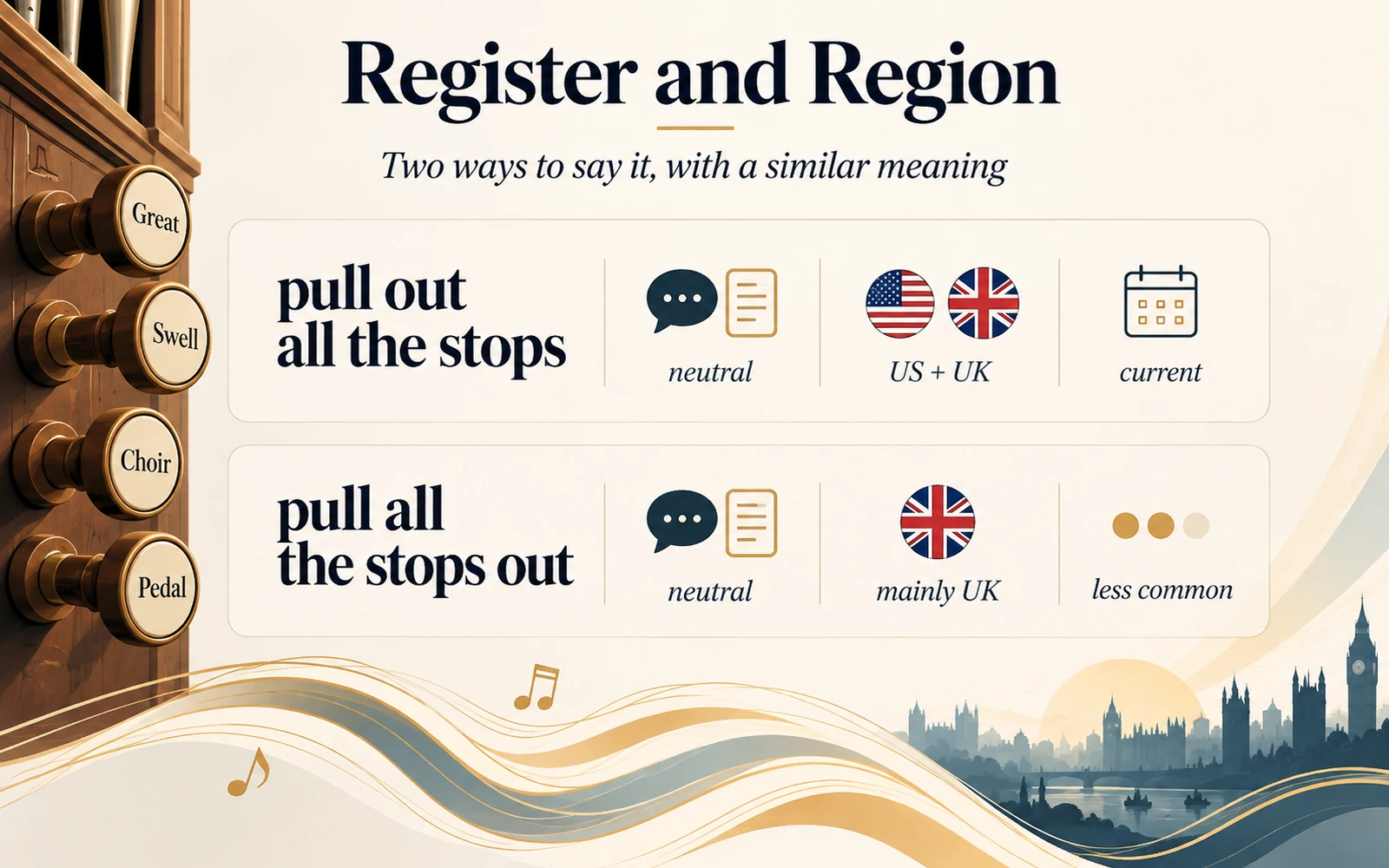
| Register | Region | Status | |
|---|---|---|---|
| pull out all the stops | neutral. Fine in speech, journalism and business writing | both US and UK | current |
| pull all the stops out | neutral | mainly UK | current, less common |
What is genuinely unresolved
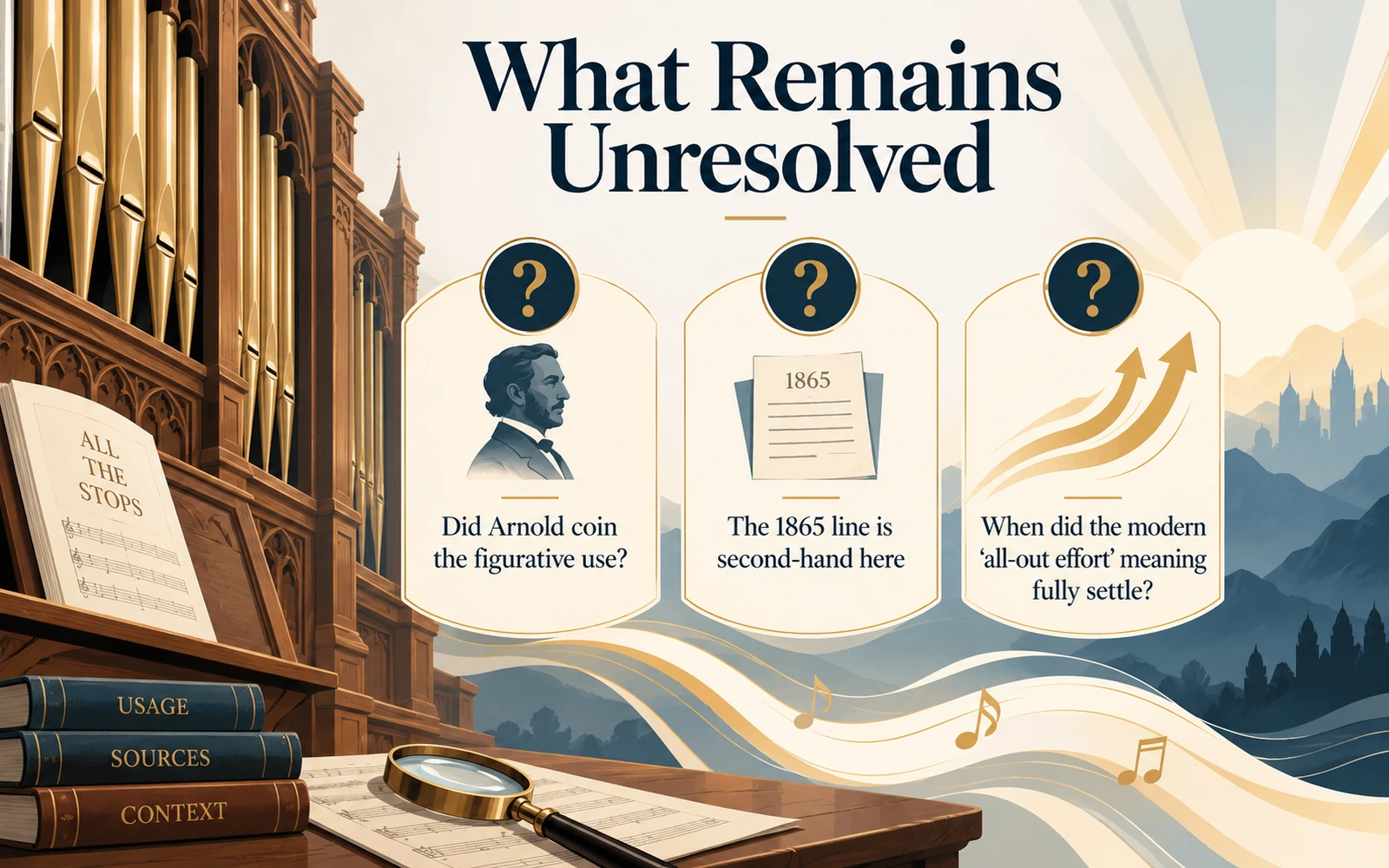
Whether Arnold coined the figurative use or borrowed it is not established. He is the earliest figurative citation Phrase Finder gives, which is not the same as being the first person to say it.
The Arnold line is carried at second hand. Essays in Criticism was not opened for this page.
When the phrase settled into its modern all-out sense is not dated here. Arnold's use is clearly not yet that sense, so the shift happened somewhere after 1865, and pinning it down would take a corpus study we have not run.