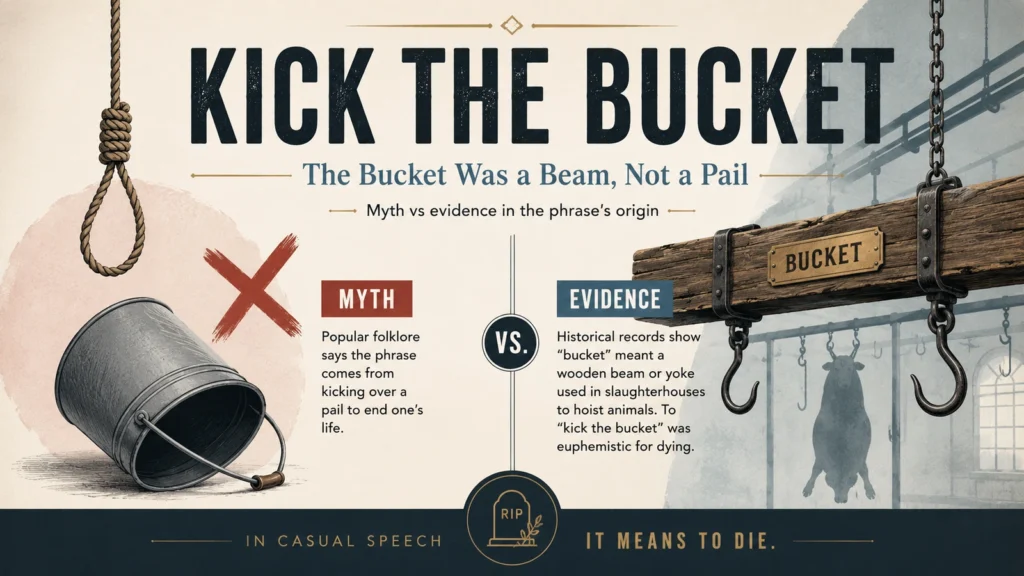
The story most people have heard is that "kick the bucket" describes a suicide: a person stands on an upturned pail with a rope around the neck and kicks the pail away. It is vivid, it is grim, and it fits the phrase so neatly that it rarely gets questioned.
Phrase Finder rejects it, and the reason is the ordinary one on this site: there are no citations behind it. The competing explanation, which Phrase Finder calls the more credible of the two, is that the "bucket" in the phrase was never a pail at all. This is one of the clearest worked examples of what the tracing method used across these pages is for, because the two theories are told with equal confidence everywhere and only one of them has any documentary support.
The citation trail
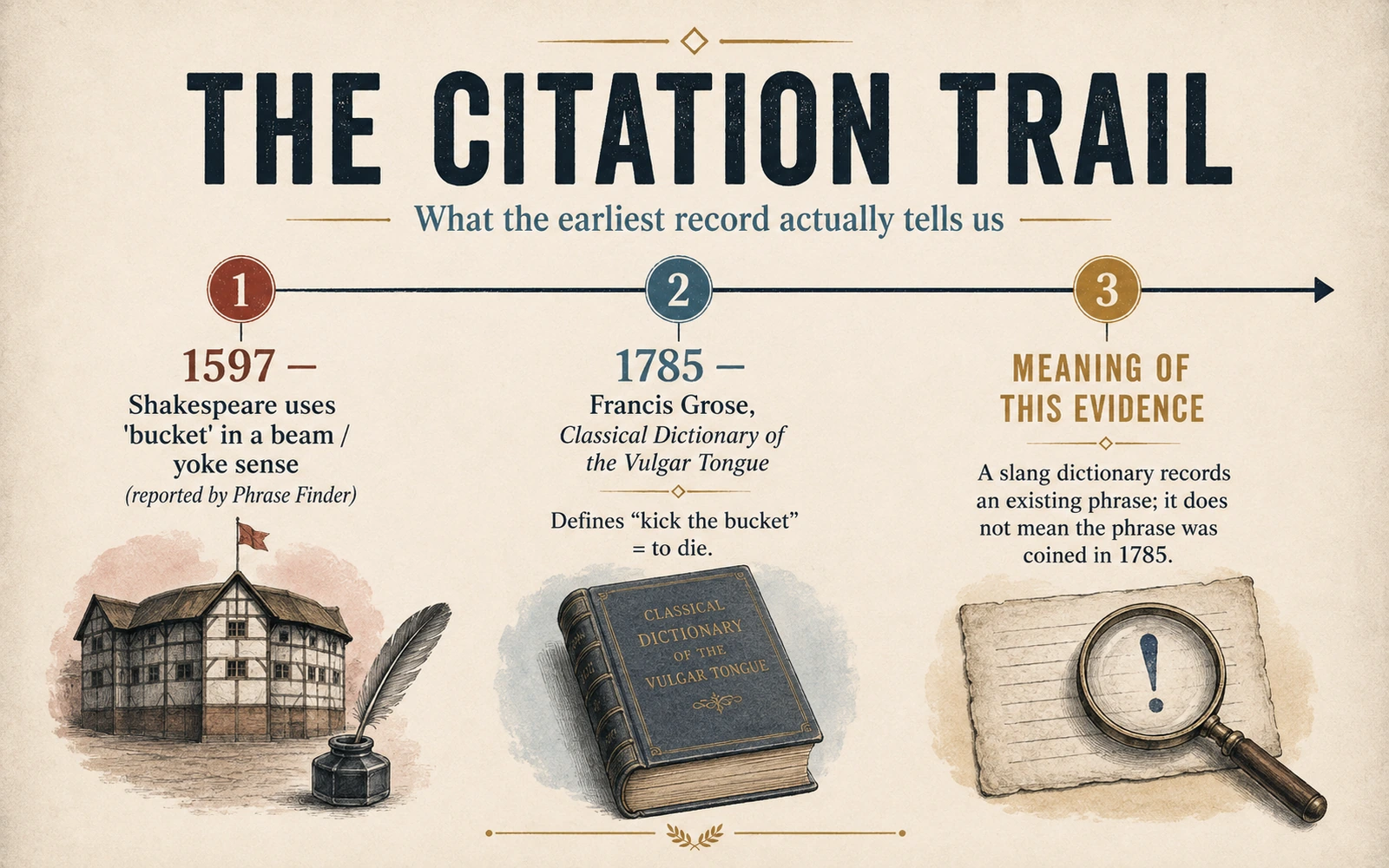
The earliest documentation Phrase Finder gives is a definition rather than a use: the phrase was defined by 1785 in Francis Grose's Classical Dictionary of the Vulgar Tongue as "To kick the bucket, to die."
That is a useful kind of citation and it is worth understanding why. Grose was compiling slang, so an entry in his dictionary tells you the phrase was already established in speech by 1785, not that it was coined then. Slang dictionaries are lagging indicators. A phrase has to be common enough to be worth recording before a compiler records it.
The other sense of "bucket"
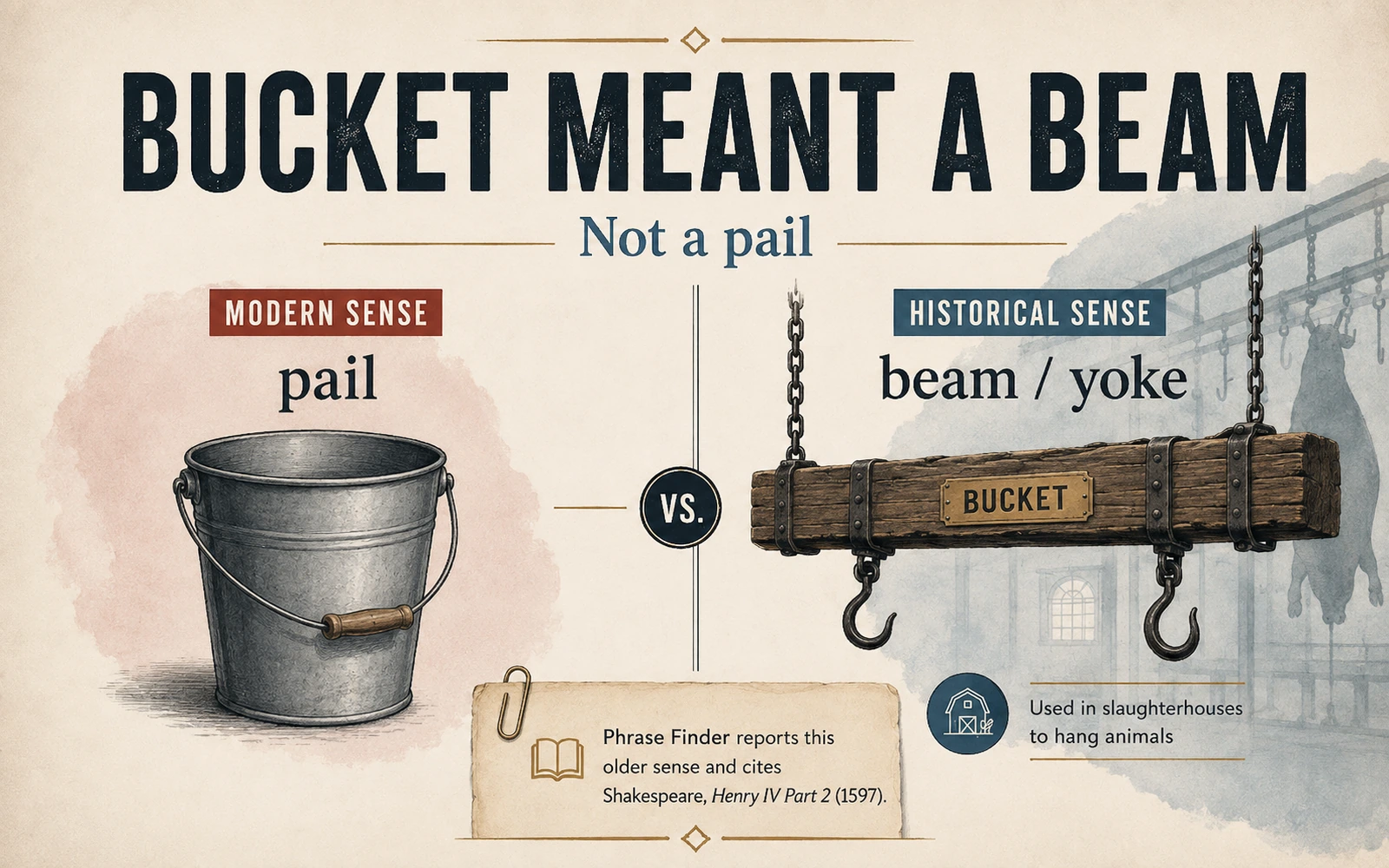
The explanation Phrase Finder favors turns on a word sense that has almost completely disappeared from modern English. From the sixteenth century, "bucket" also meant a beam or a yoke, a wooden frame from which things were hung or carried, and the word in that sense is thought to come from French rather than from the same root as the pail.
The specific frame that matters here is the one animals were hung from for slaughter. An animal hung on such a beam would spasm and kick against it. That gives a direct route from a literal scene to a figurative phrase about dying, and it requires no invented custom to make it work.
Phrase Finder supports the beam sense with a Shakespeare reference: Henry IV Part 2, 1597, where the word is used in that sense in a gibbet context. We report that as Phrase Finder reports it. We did not open the play text to confirm the line, and anyone building on this page should.
Why the suicide story fails
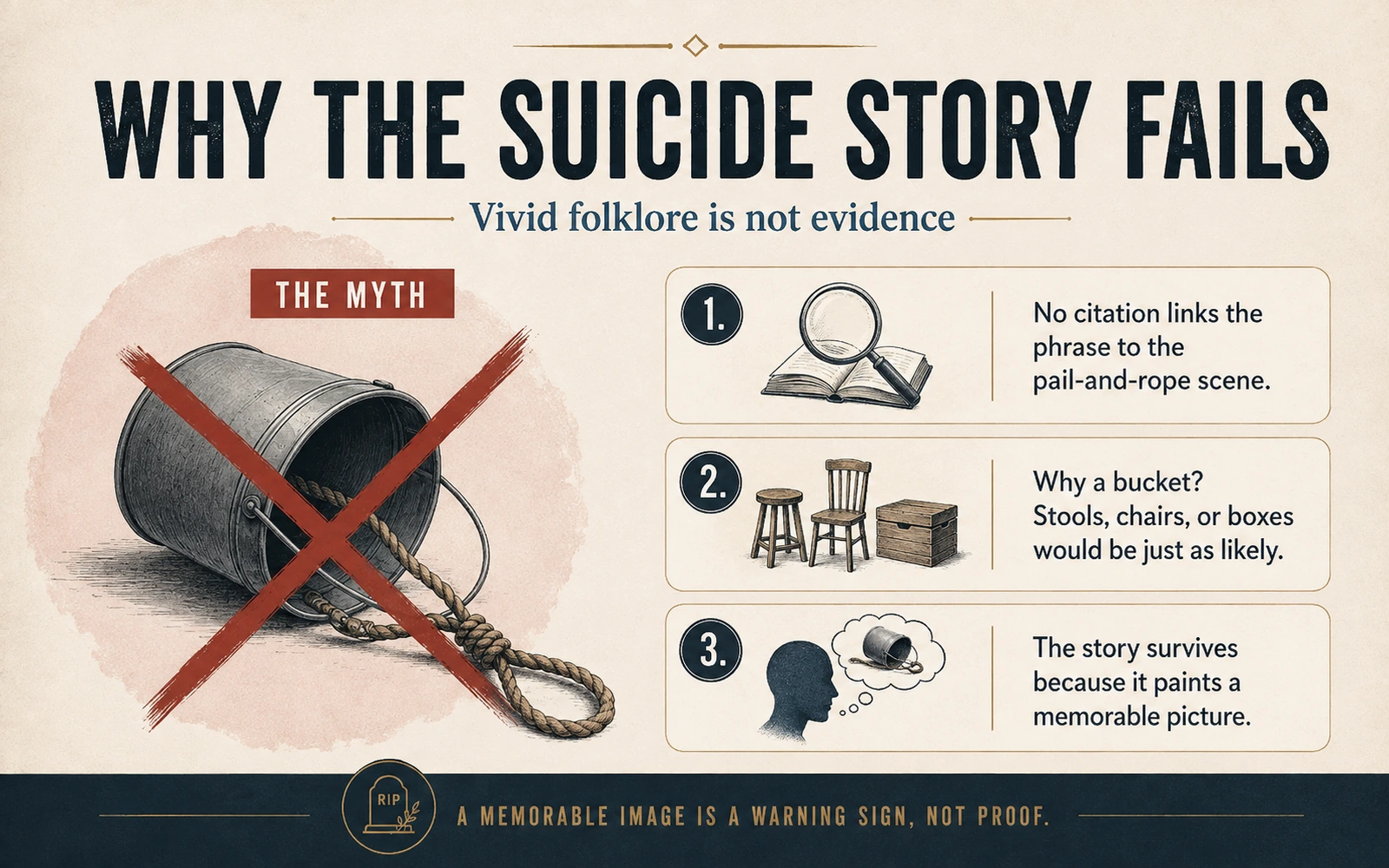
Phrase Finder's objection is not merely that the suicide theory is unsupported. It also asks a practical question that is hard to answer: why a bucket. A person planning that act has stools, chairs, boxes and steps available, and none of the accounts explain why a pail became the fixed object in the phrase.
Add that to the absence of any citation linking the phrase to the practice and the theory is left standing on nothing but its own vividness.
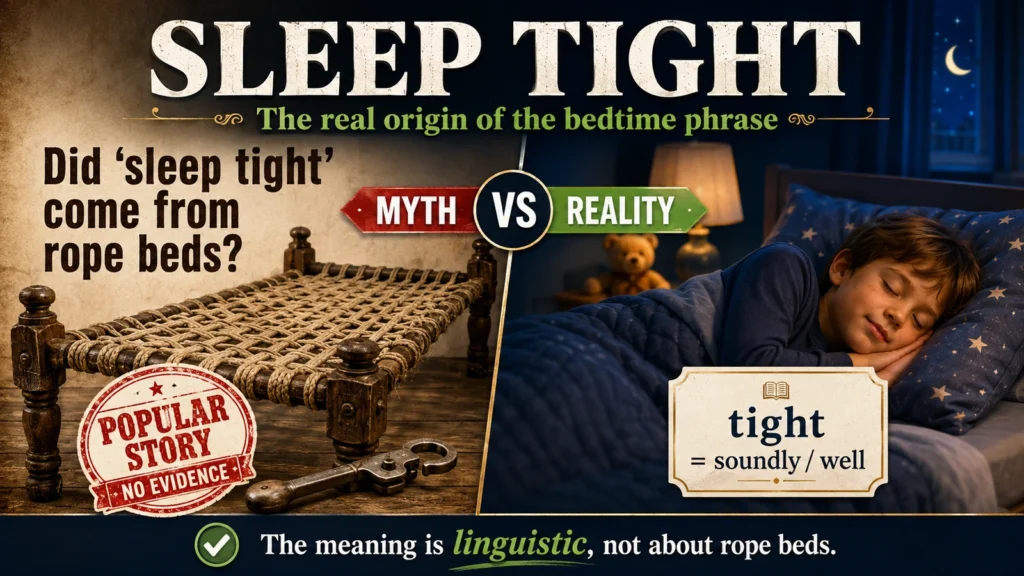
Vividness is exactly the warning sign. A folk etymology has to survive by being memorable, because it cannot survive by being documented, so the stories that spread are the ones that give you a picture. The rope-bed story behind "sleep tight" works the same way, and so do the thatched-roof cats attached to "raining cats and dogs". In all three cases the image is the reason the story travels and the absence of a citation is the reason it should not be repeated as fact.
What this page is not claiming
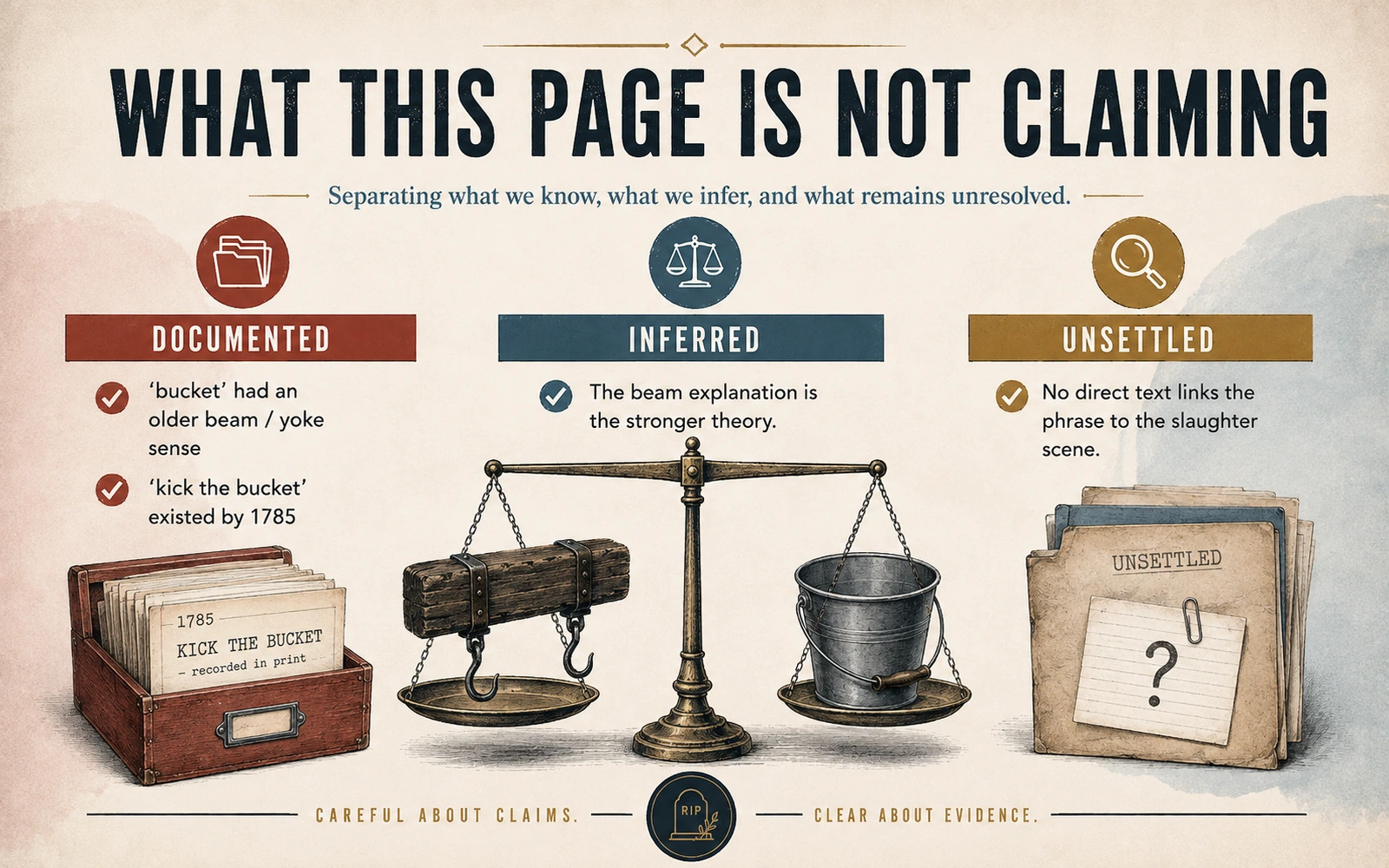
The beam explanation is the better-supported of the two. It is not proven.
What is documented is that the word "bucket" carried a beam sense, that the phrase existed by 1785, and that no citation connects the phrase to the pail-and-rope scene. What is not documented is a text showing someone using "bucket" in the slaughter sense and then using the phrase to mean dying. Without that link, the beam story is a strong inference rather than a demonstrated chain.
Saying so is not hedging. It is the difference between what the references show and what they suggest, and a reader who has just been given a confident answer by three other pages is precisely the reader who needs that difference spelled out.
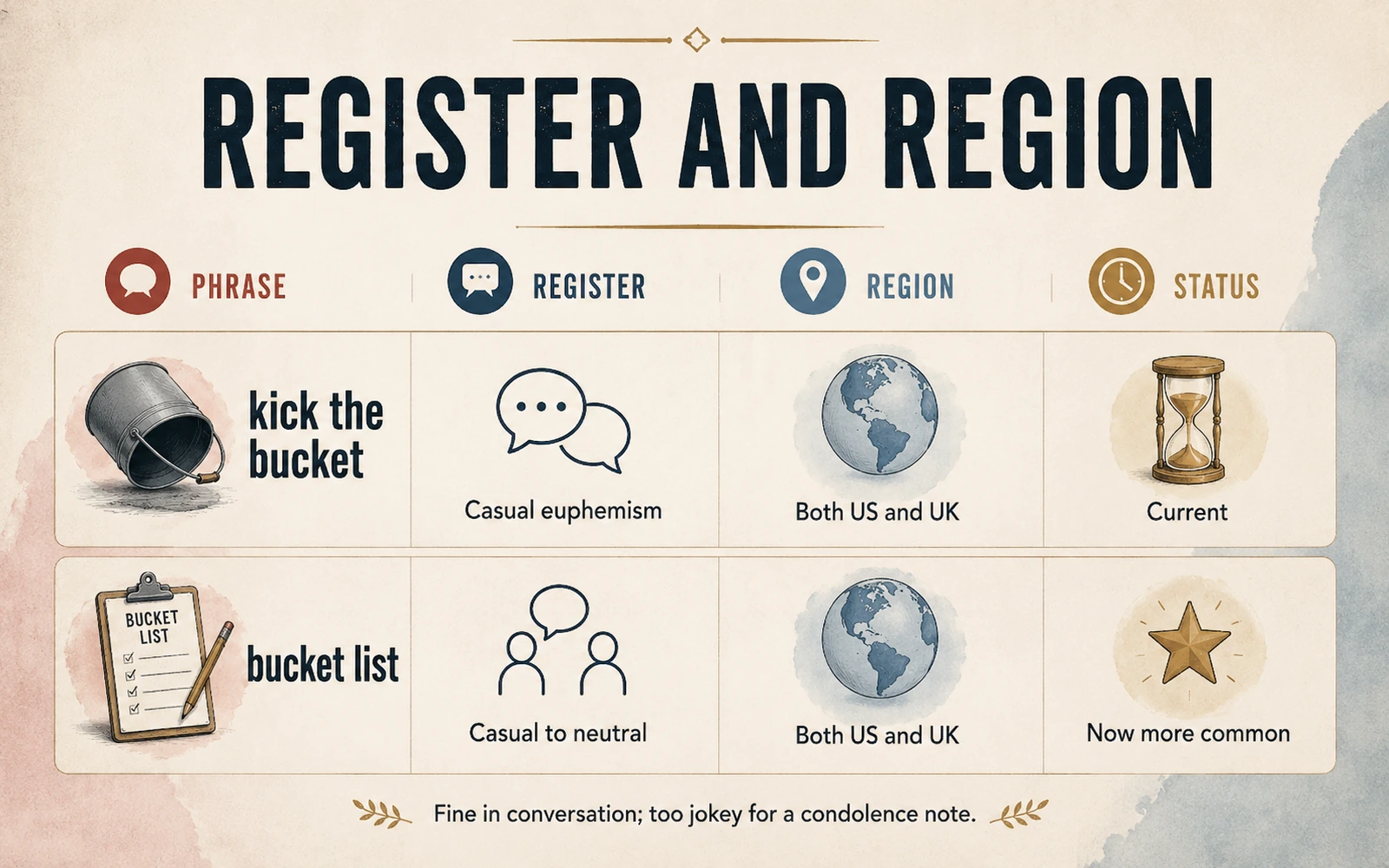
Register and region
| Register | Region | Status | |
|---|---|---|---|
| kick the bucket | casual. A euphemism with a jokey edge, so it is wrong in a condolence note and fine in conversation | both US and UK | current |
| bucket list | casual to neutral, derived from this phrase and now far more common than it | both US and UK, more common in US usage | current |
What is genuinely unresolved
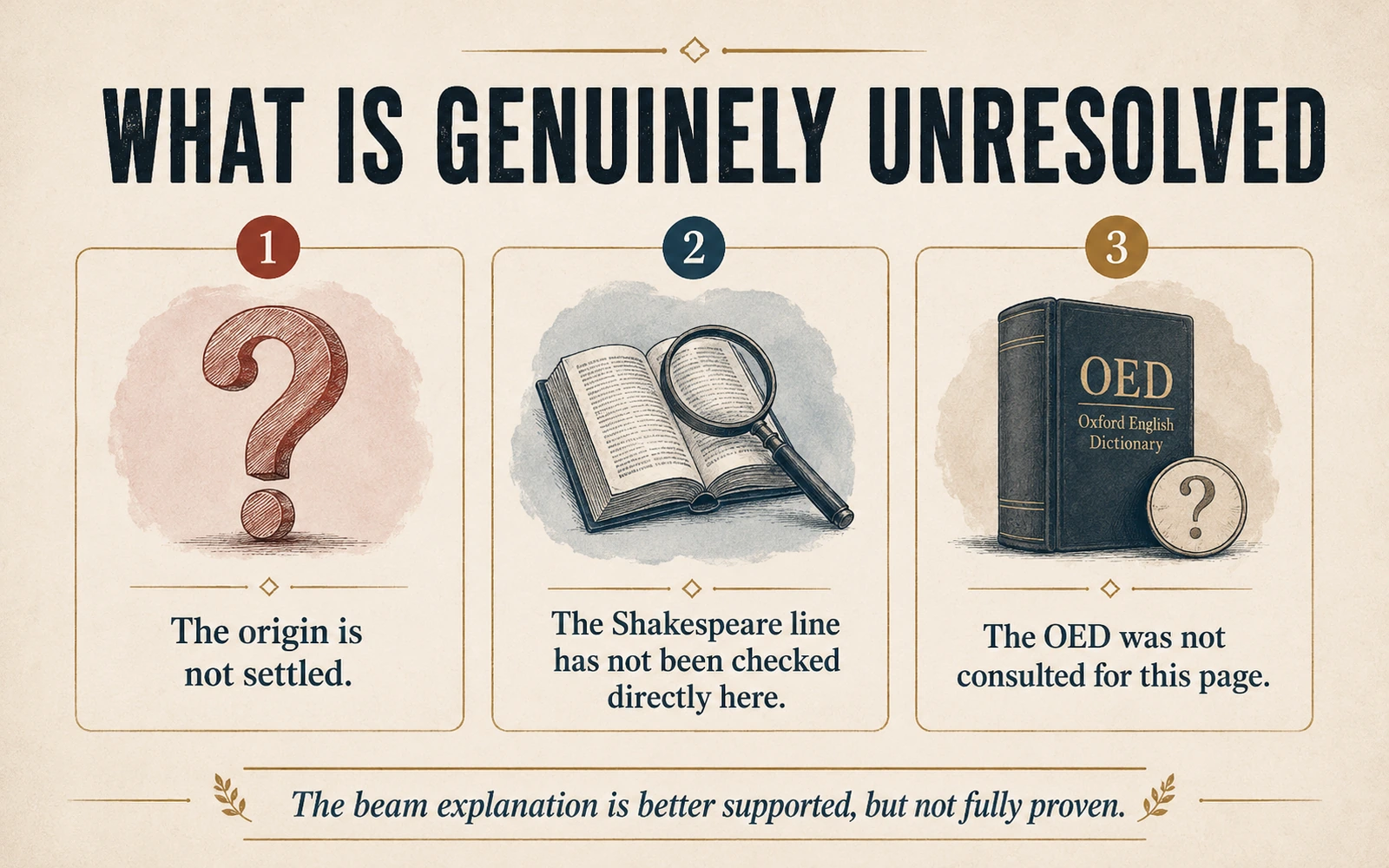
The origin is not settled. The beam sense is the better-supported theory, not a demonstrated fact.
We have not confirmed the Shakespeare line directly. It is carried here on Phrase Finder's authority and should be checked against the play text.
The OED was not consulted for this page. Its entry for the beam sense of "bucket" is the obvious next source and would strengthen or weaken the case more than anything else available.